| Capital | Kathmandu |
|---|---|
| Population | 29 651 054 inh. |
| Area | 147 180 km² |
| Population density | 201.5 inh./km² |
| Local time | --:-- |
| Language(s) | Nepali |
| Political system | Federal parliamentary republic |
| National motto | Mother and Motherland are Greater than Heaven |
| National anthem | Sayaun Thunga Phool Ka (Made of Hundreds of Flowers) |
| Currency | Nepalese rupee (NPR) |
| Land borders | China, India |
The flag: history and symbolism
Flag History
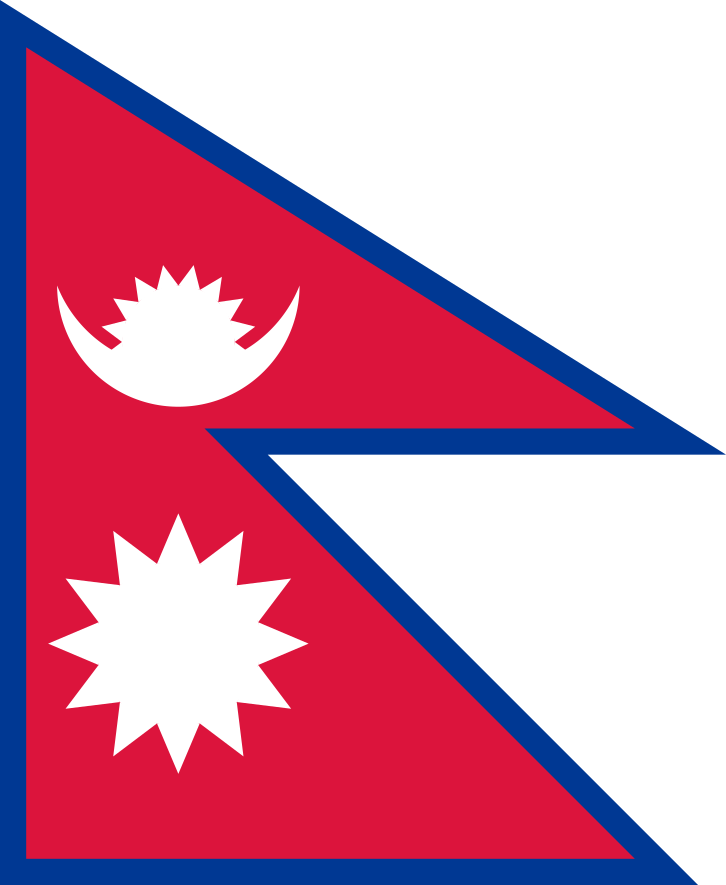
Nepal is the only country in the world whose national flag is not rectangular. It is made up of two stacked triangular pennants, descended from two separate banners once used by rival branches of the Rana dynasty, which ruled the country as hereditary prime ministers for more than a century. The two pennants were combined into a single flag as early as the nineteenth century.
The design only gained official status and precisely fixed geometric proportions on 16 December 1962, when a new constitution established a parliamentary form of government. Before that date, the sun and moon on the flag were shown with human faces; they were then stylized and simplified, with the facial features removed, to modernize the national emblem.
Meaning of Colors & Emblems
- Crimson red: the color of the rhododendron, Nepal's national flower, and a symbol of bravery.
- Blue border: peace.
- Moon (upper pennant): the coolness of the Himalayan climate and the calm nature of the Nepali people.
- Sun (lower pennant): the heat of the Terai lowlands and the fierce resolve of the Nepali people.
The flag's very shape, two stacked triangles, is sometimes linked to the Himalayan peaks that tower over the country, although no official text confirms this interpretation.
Anecdotes & Fun Facts
Nepal is the only country in the world without a rectangular or square flag, a quirk that regularly causes protocol headaches at international ceremonies or sporting events, where every other flag is almost always rectangular.
Until 1962, the sun and moon on the flag were shown with human faces, complete with eyes, nose and mouth. These features were removed during the flag's geometric simplification, which has since kept only the stylized rays of the sun and the crescent of the moon.
The flag's two pennants descend from separate banners carried by two rival branches of the Rana family, who governed Nepal as hereditary prime ministers from 1846 to 1951, while the Nepali monarchy was reduced to a largely symbolic role.
Sport and history
Athletes
Frequently asked questions
What is the capital of Nepal?
Kathmandu is the capital of Nepal.
What do the colors of the flag of Nepal mean?
Crimson red: the color of the rhododendron, Nepal's national flower, and a symbol of bravery.Blue border: peace.Moon (upper pennant): the coolness of the Himalayan climate and the calm nature of the Nepali people.Sun (lower pennant): the heat of the Terai lowlands and the fierce resolve of the Nepali people.The flag's very shape, two stacked triangles, is sometimes linked to the Himalayan peaks that tower over the country, although no official text confirms this interpretation.