Official languages
Portuguese-speaking countries
| Country Capital | Capital | Continent | Population Continent | Official languages | |
|---|---|---|---|---|---|
 |
Angola Luanda | Luanda | Africa | 37,885,849Africa | Portugais |
 |
Brazil Brasilia | Brasilia | America | 211,998,573America | Portugais |
 |
Cape Verde Praia | Praia | Africa | 524,877Africa | Portugais |
 |
East Timor Dili | Dili | Oceania | 1,400,638Oceania | Tétoum, Portugais |
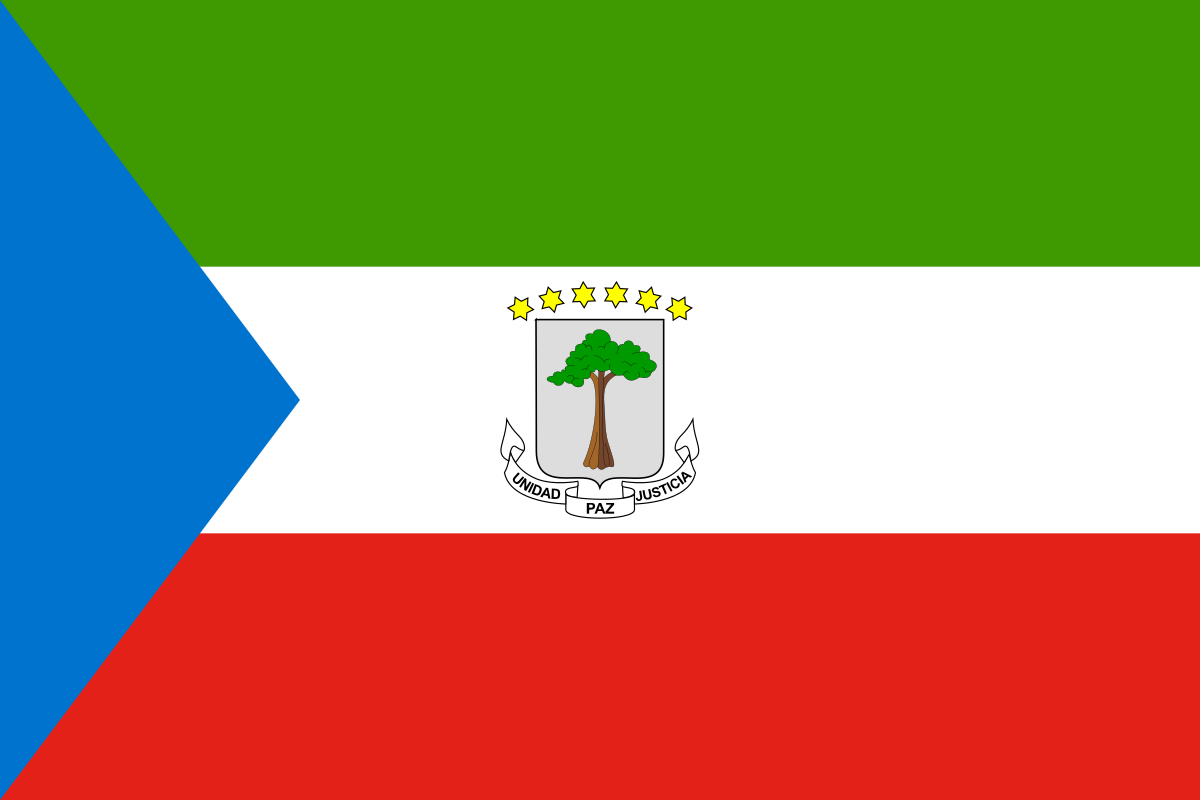 |
Equatorial Guinea Malabo | Malabo | Africa | 1,892,516Africa | Espagnol, Français, Portugais |
 |
Guinea-Bissau Bissau | Bissau | Africa | 2,201,352Africa | Portugais |
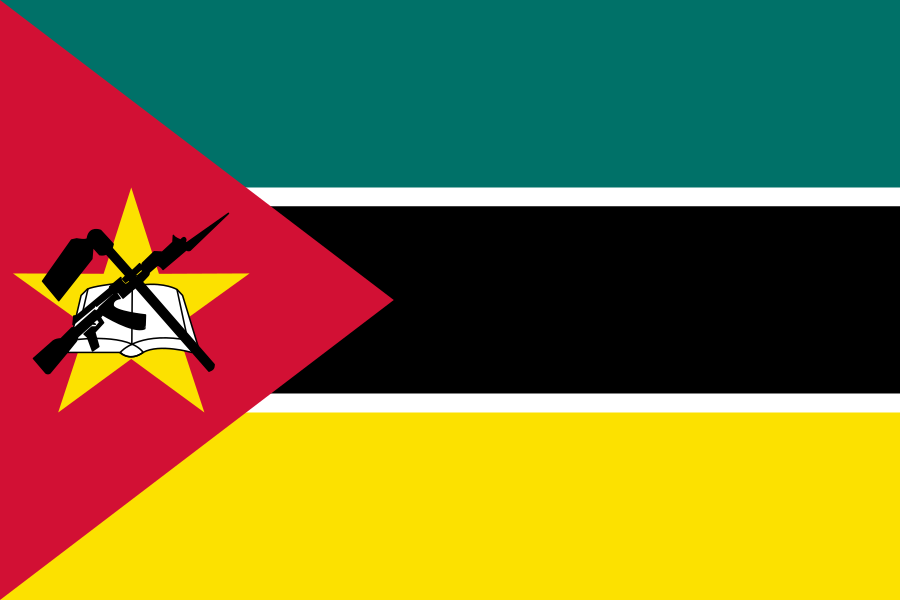 |
Mozambique Maputo | Maputo | Africa | 34,631,766Africa | Portugais |
 |
Portugal Lisbon | Lisbon | Europe | 10,701,636Europe | Portugais |
 |
São Tomé and Príncipe São Tomé | São Tomé | Africa | 235,536Africa | Portugais |
Frequently asked questions
How many Portuguese-speaking countries are there in the world?
There are 9 countries where Portuguese is an official language, across 4 continents: Europe (Portugal), South America (Brazil), Africa (Angola, Mozambique, Cape Verde, São Tomé and Príncipe, Guinea-Bissau) and Asia (East Timor).
What is the largest Portuguese-speaking country?
Brazil is by far the largest Lusophone country, both in area (8.5 million km², 5th globally) and population (~215 million). It accounts for about 80% of native Portuguese speakers worldwide.
Are Brazilian and European Portuguese very different?
There are notable differences in pronunciation, vocabulary and sometimes grammar between the two varieties — comparable to American vs British English. Speakers understand each other perfectly in both spoken and written form.
Is Portuguese an important world language?
Yes: with around 260 million native speakers, Portuguese is the 6th most spoken native language. It is also the official language of the CPLP (Community of Portuguese Language Countries) and one of the EU's official languages.